One of the most promising application areas for machine vision is precision agriculture. We discuss this with Daniele Covi, co‑founder of Eoptis.
One of the most promising areas of application for machine vision is precision agriculture, given that farms have always paid close attention to the quality and safety of their products, as well as the efficiency and effectiveness of their production processes.
Located in Trentino, where agriculture is a very important sector, Eoptis has been active in the field for some time, explains Daniele Covi, founding partner and technical manager of the Trentino-based company. A physicist by training, he has become very familiar with the needs of those working in the field. Here is what he told us.
The conversation
How can machine vision support agriculture and the food industry, two key drivers of the Italian economy?
Machine vision — and, more broadly, data‑providing technologies such as sensors — is crucial for optimizing production processes in both the food industry and agriculture. In practice, it enables more efficient use of resources (water, fertilizers, etc.) while simultaneously improving yields.
What are the Machine Vision solutions for precision agriculture developed by Eoptis?
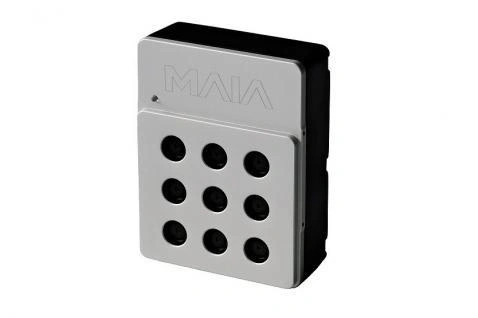
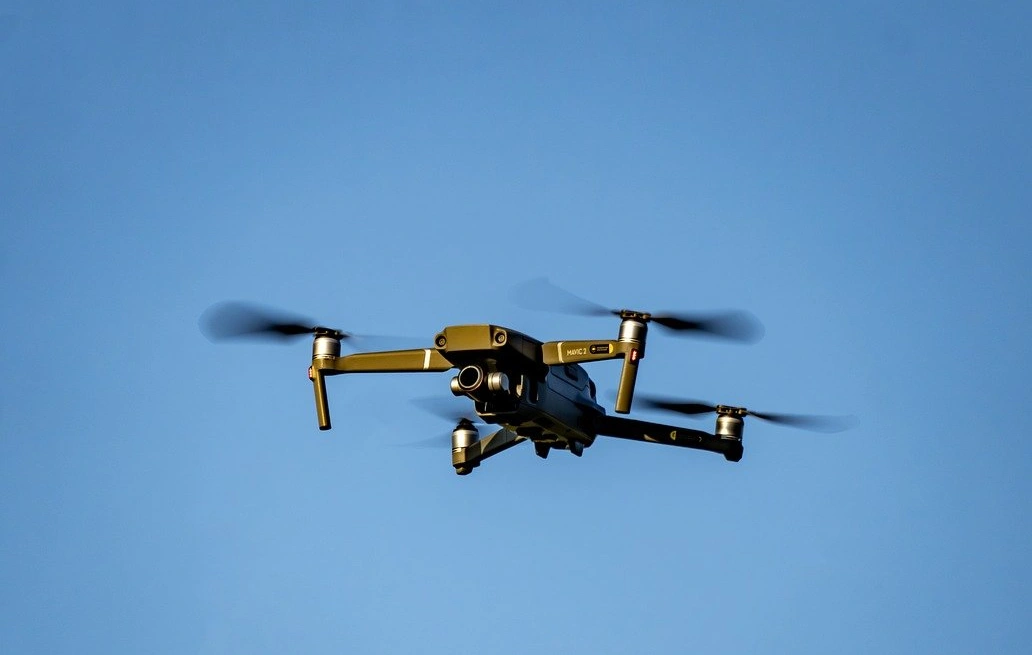
When it comes to precision agriculture, our offering focuses on machine vision. We have developed MAIA, a multispectral camera that can be mounted on remotely piloted aircraft (drones) to perform aerial surveys of crops and gather key information on their vegetative state. This makes it possible to assess plant health and obtain valuable insights into the causes of any stress or decline.
So the camera is mounted on a drone, the drone flies over the crop and takes a series of images, and these images are then used by the farm once the drone has landed, right?
Yes, broadly speaking, that’s correct. This approach makes it possible to create a complete map of the entire area of interest, extracting the relevant information case by case depending on the type of crop — one thing if we are dealing with a vineyard and another if we are dealing with an orchard, a cornfield, or a wheat field.
.
.
.
.
Is MAIA optimized for use on drones?
Yes, absolutely. It includes several technical features specifically designed to support drone integration: it is compact, lightweight, and equipped with optimized interfaces. Within certain limits, it can also be adapted for ground‑based use — for example, mounted on self‑propelled vehicles or on fixed installations such as a pole to monitor a greenhouse from above or to observe field crops.
What are its strengths?
Mainly the spectral bands. MAIA features a set of bands — that is, specific wavelength ranges within the light spectrum — that match those of the Sentinel‑2 satellite, launched by the European Space Agency for environmental monitoring missions. Sentinel‑2 data is open, freely accessible, and already widely used in agriculture to map large areas. However, it has limitations: availability depends on weather conditions (cloud cover prevents observation), and its spatial resolution is relatively low, with a ground sampling distance of at least 10 meters. MAIA fills this gap by offering a resolution of just a few centimeters.
Another application where high resolution is crucial is selective weeding. MAIA can generate a map showing the precise location of weeds, providing GPS coordinates with an accuracy of a few centimeters; this allows sprayers to treat only the exact spots where intervention is needed. In all these scenarios, surveys can also be carried out under overcast or variable conditions, because the ILS sensor integrated into the camera makes the images immune to changes in ambient light.

.
.
.
.
MAIA is a fully Made-in-Italy solution, right?
Yes, MAIA is an entirely Made‑in‑Italy solution, and we at Eoptis are very proud of that. I would even say it is probably the only solution of its kind in Europe. In addition to the multispectral camera, we also provide the software needed to analyse the images and generate what we call false‑colour maps, where the relevant information is highlighted using red or green areas on the map.
Who are MAIA’s typical buyers?
Our customers are truly worldwide — in the United States, across Europe, and in several Asian countries such as Singapore. And they are not only companies: many research centres and universities are also very interested in our solution.