

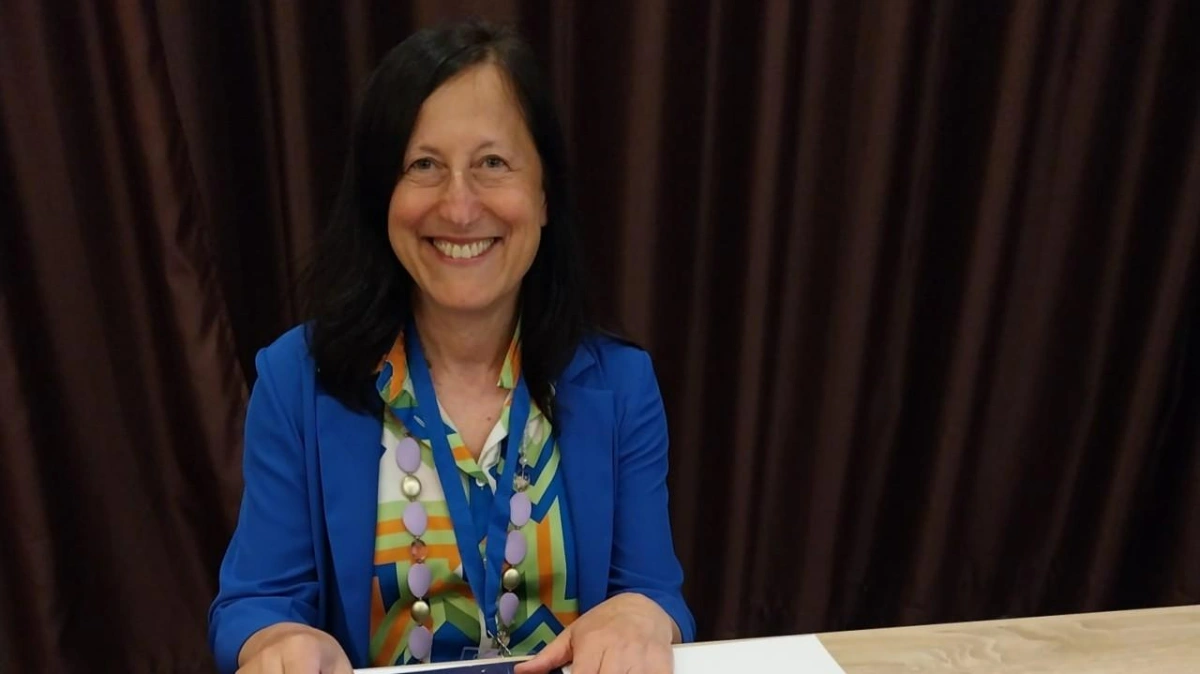

Recently, Metreo — a long‑standing partner of Eoptis — published an in‑depth conversation with Claudia Pelosi on its LinkedIn blog. A highly experienced chemist and associate professor at the University of Tuscia, she has long been at the forefront of cultural heritage preservation, with a particular focus on the study of materials. Over the course of the long and fascinating two‑part interview, she also highlighted the contribution of Eoptis technology. Here are some excerpts.
The conversation
What projects are you focusing on lately?
My team and I are working on several interesting projects. The most important is CHANGES, an initiative in which we participate as part of the Lazio Region’s Cultural Heritage and Activities Technology District, which also includes the University of Tuscia. We are involved in Spoke 7, which focuses on the protection and conservation of cultural heritage in the face of climate change as well as anthropogenic and natural phenomena. Our work centers on a monumental complex in Viterbo, Colle del Duomo, which includes both the Cathedral of San Lorenzo (the Duomo) and the renowned Palazzo dei Papi.
We have begun extensive monitoring of the collections, both inside the Colle del Duomo Museum and in the Sala del Conclave.
For example?
Sensors can alert us when lighting levels at a specific point are too high and could potentially damage an object. When we receive an alert, we intervene immediately. This is what happened with the vestment of St. Boniface, the third bishop of Ferento: we were notified that, during the summer, excessive sunlight was entering through the large windows of the Conclave Room and could harm the vestment. The museum staff promptly addressed the issue by installing shading on the windows.
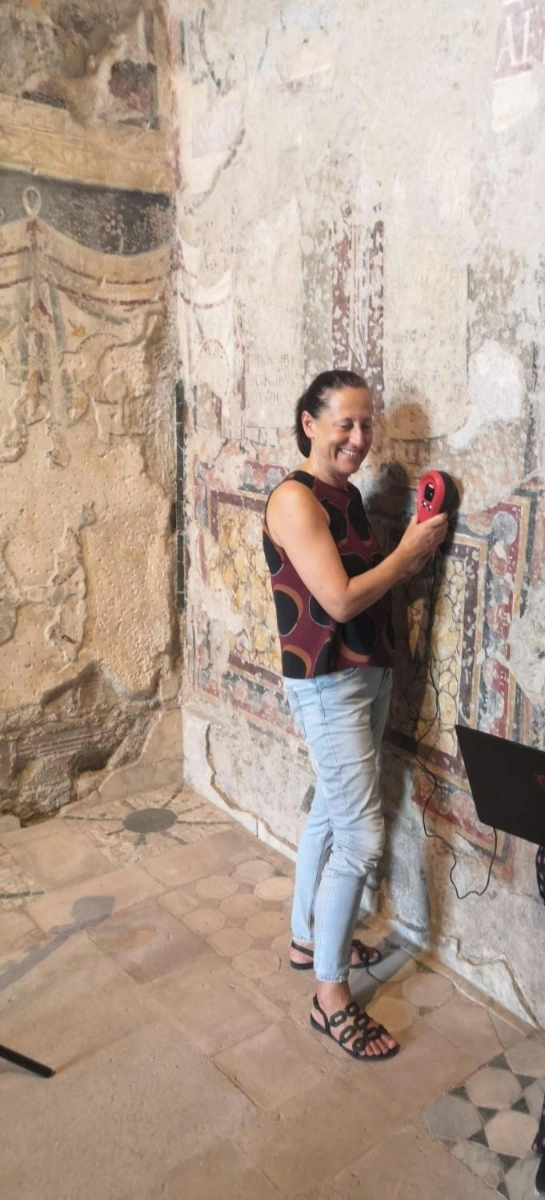
In addition to environmental monitoring sensors and thermal cameras, you and your team also use colorimeters in your work, is that correct?
We use the Eoptis colorimeter, supplied by Metreo, and it has enabled us to work across multiple areas. Using it has allowed us to carry out valuable experiments and obtain measurements that have been essential to our research — to the point that we have referenced this technology in several scientific publications.
.
.
For example, within the European EHEM project, we studied the colors of medieval paintings, many of which were partially damaged or missing. The goal was to achieve a “reconstruction” of these colors. We used the colorimeter to map them in detail — something that would not have been possible without this instrument — and then associated these data with maps produced using another photographic acquisition system. This allowed us to recreate a sort of chromatic palette for various contexts that serve as case studies within the project. In particular, the work we published in the Journal of Imaging focused on the Church of Santa Maria Antiqua, a medieval church located within the Roman Forum in Rome.
Do you and your team manage to generate new best practices through your work?
Of course — that is exactly our goal. Technology can help make it easier for museums and cultural institutions to carry out control, maintenance, monitoring, and, when necessary, intervention. Sometimes sensors are installed but then receive little or no attention. They are simply left in place, and the batteries run down or even oxidize, as we have unfortunately seen. Our work is about promoting and encouraging proper monitoring and maintenance practices, as already happens in other countries. Italy has extraordinary museums and heritage sites — we must do everything we can to protect and preserve them.
.